Launch offer — valid today only

📄 Digital book in PDF · read it on your phone or print it

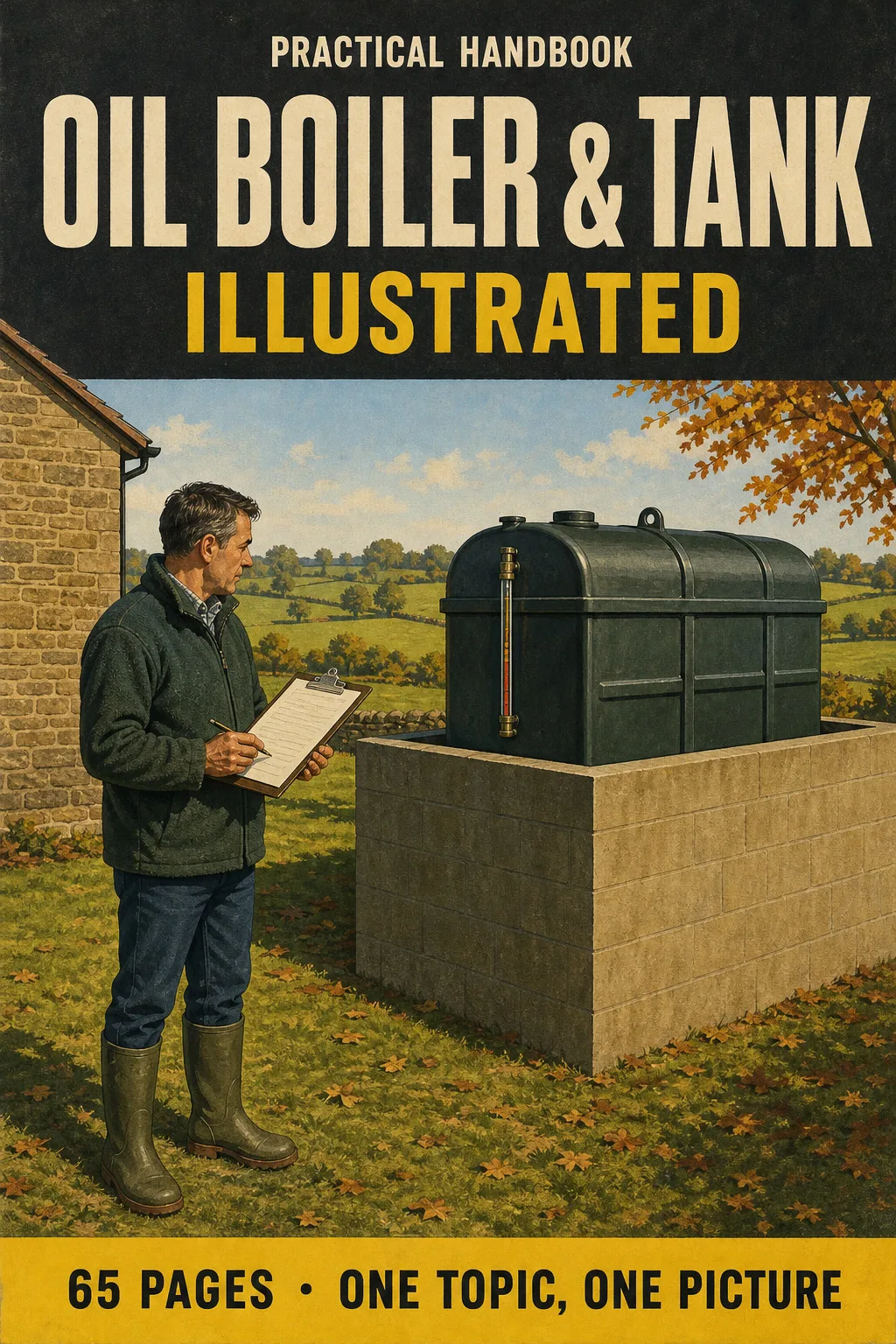
Your Oil Boiler and Kerosene Tank, in Drawings One Topic on Every Page

The red light on a cold morning and the 5 checks before you press reset. The tank and its gauge, the fire valve, the burner, leaks, the CO alarm, deliveries and the October check. Every topic has its own page: the drawing first, then what you need to remember. 65 illustrated pages.

SHOW ME MY OIL SYSTEM, PAGE BY PAGE

🔒 Secure checkout · PDF by email · 30-day guarantee

Every topic, its own pageEach part of the system drawn, with the explanation beside it
65 illustrated pages10 parts, from the tank-to-flue map to the when-to-call list
Up-to-date sourcesApproved Document J, the Oil Storage Regulations 2001 and Environment Agency guidance
PDF by emailFormat

Look Inside the Book

Every page has one big drawing and a box with the distances, rules and checks you need to know:

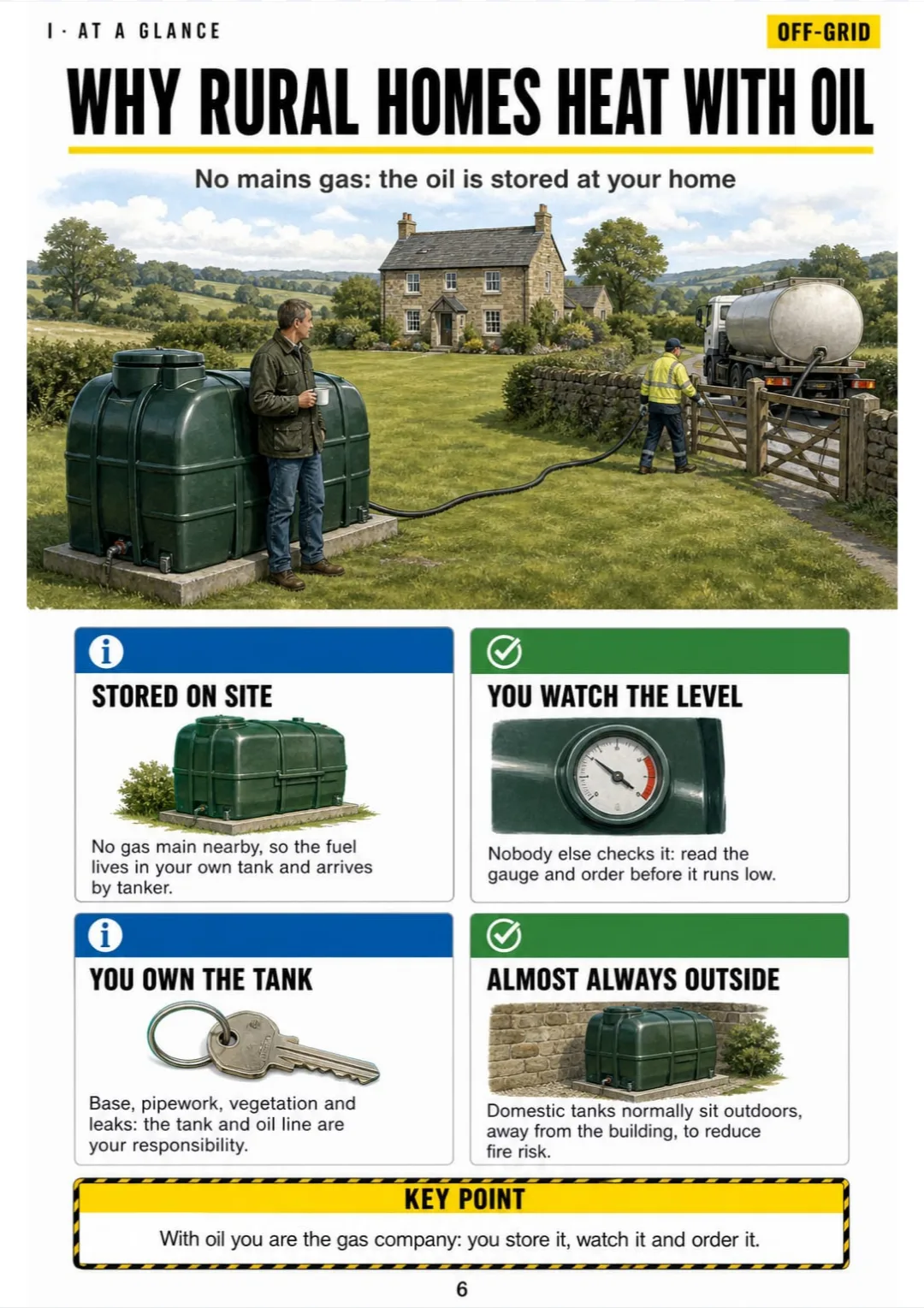
Oil heating = your own tank: you watch the level, the tank and the line
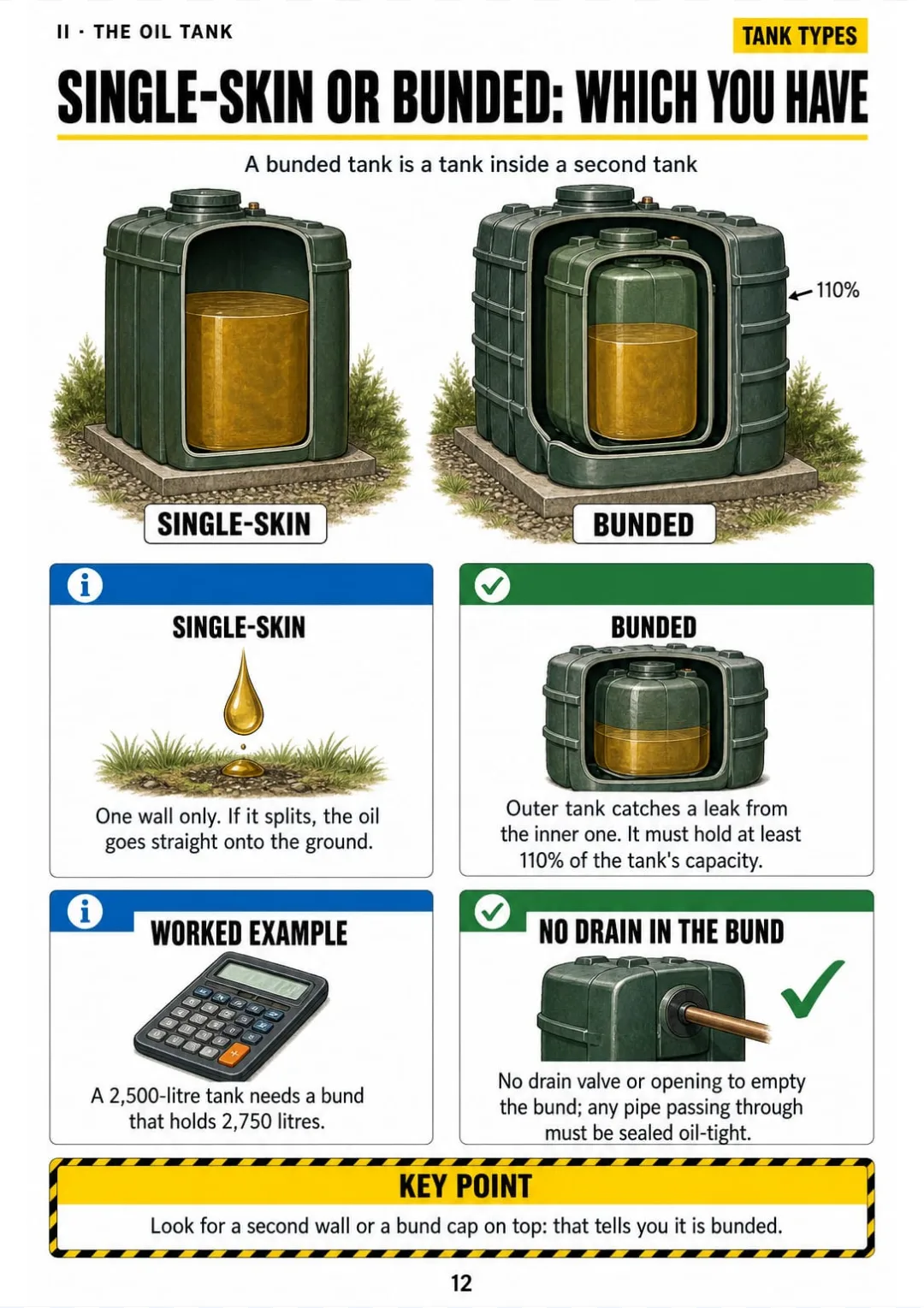
A bund must hold 110% of the tank: 2,750 litres for a 2,500-litre tank.
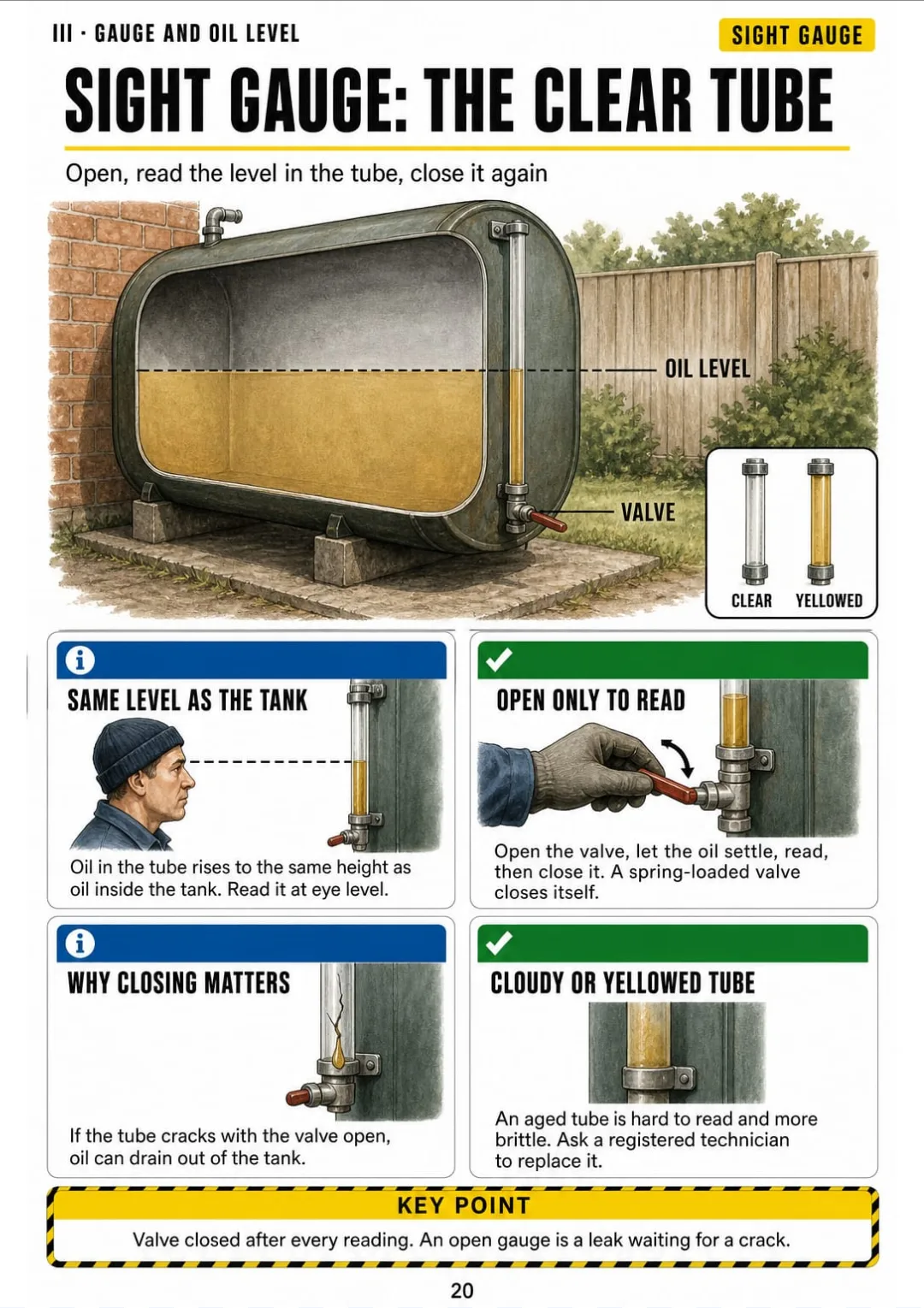
The sight gauge: open, read at eye level, close – and why a yellowed tube needs replacing
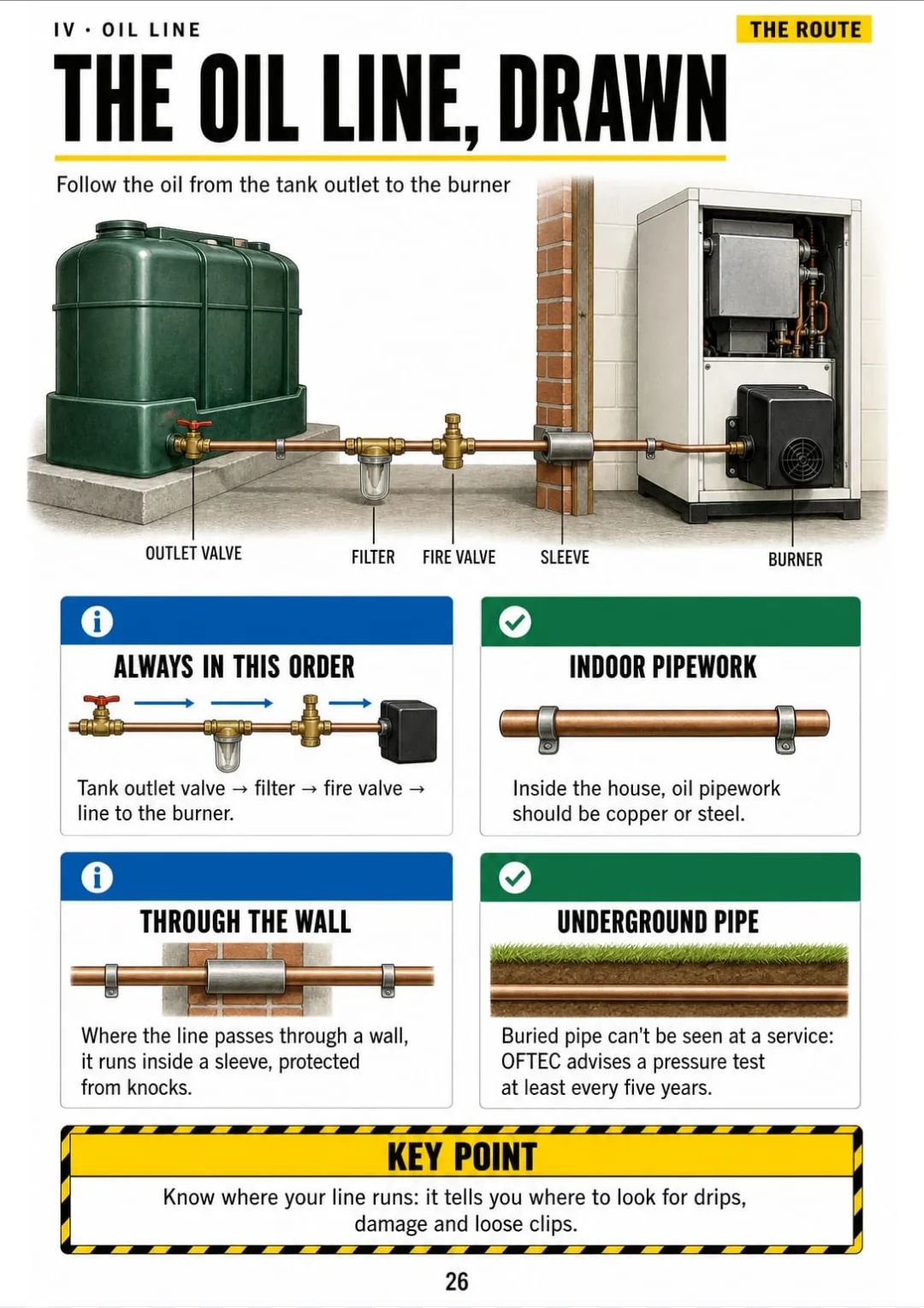
Tank valve → filter → fire valve → burner: the oil line, drawn
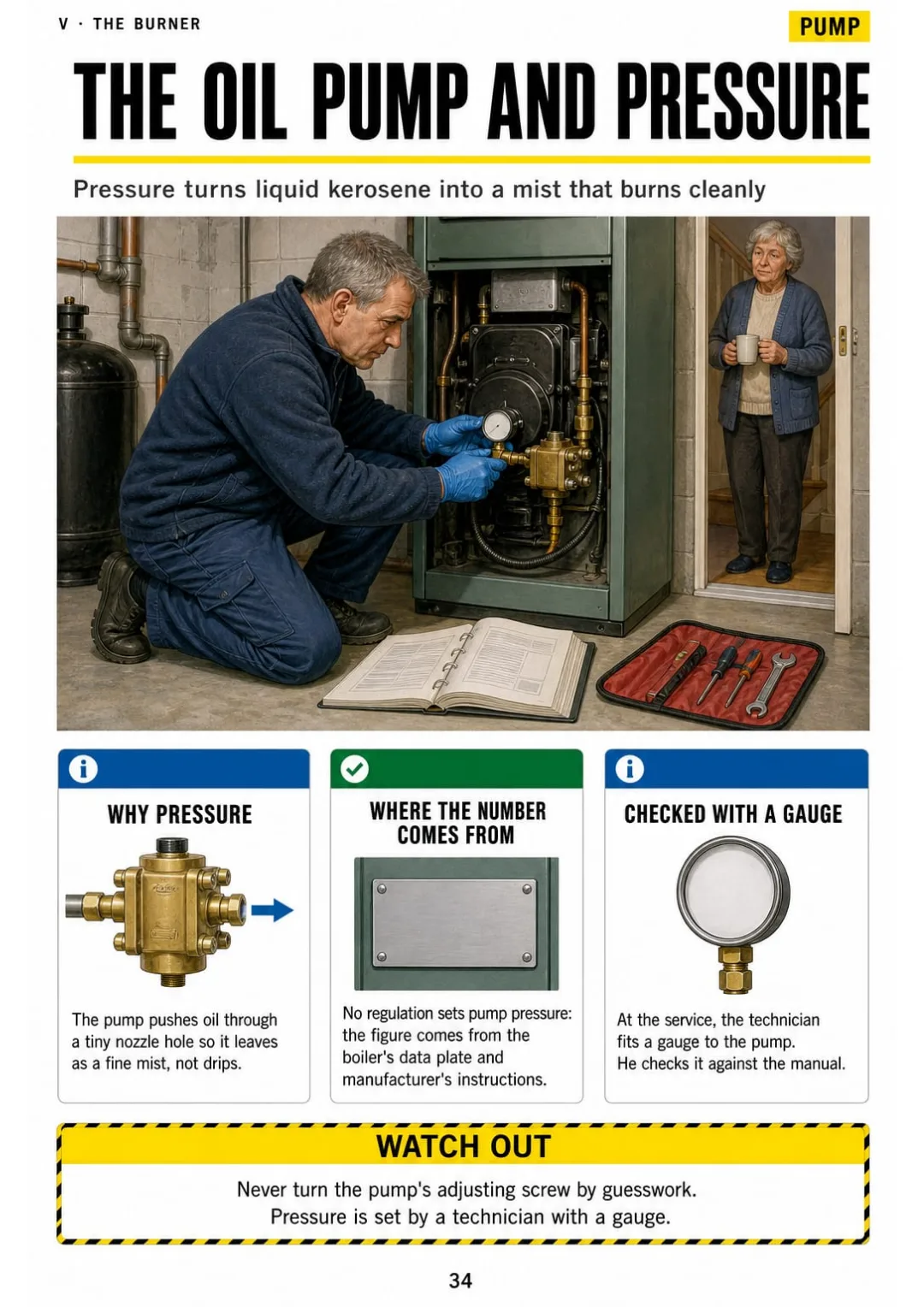
Pump pressure comes from the data plate and is checked with a gauge at every service.
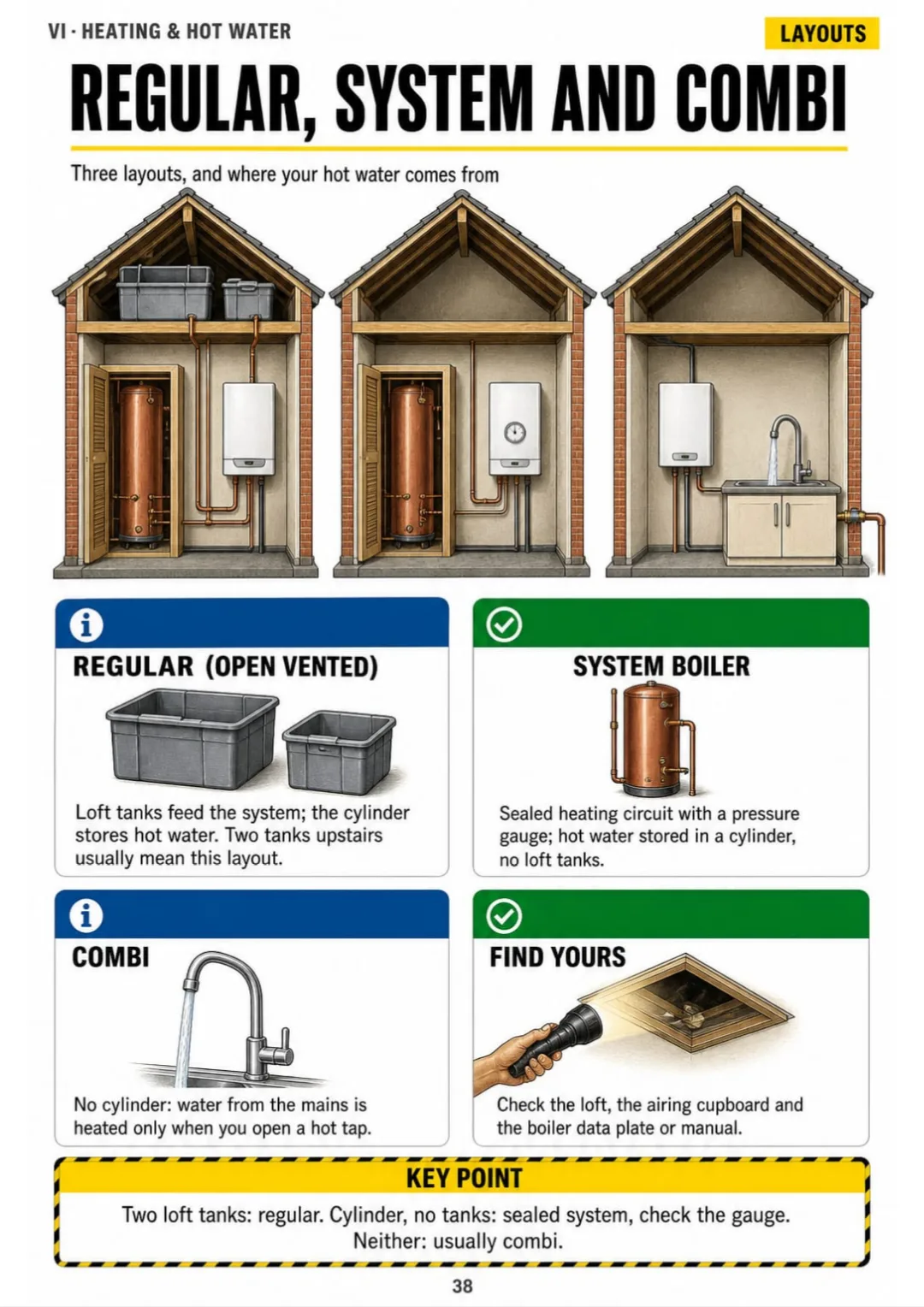
Regular, system or combi: check the loft and the airing cupboard
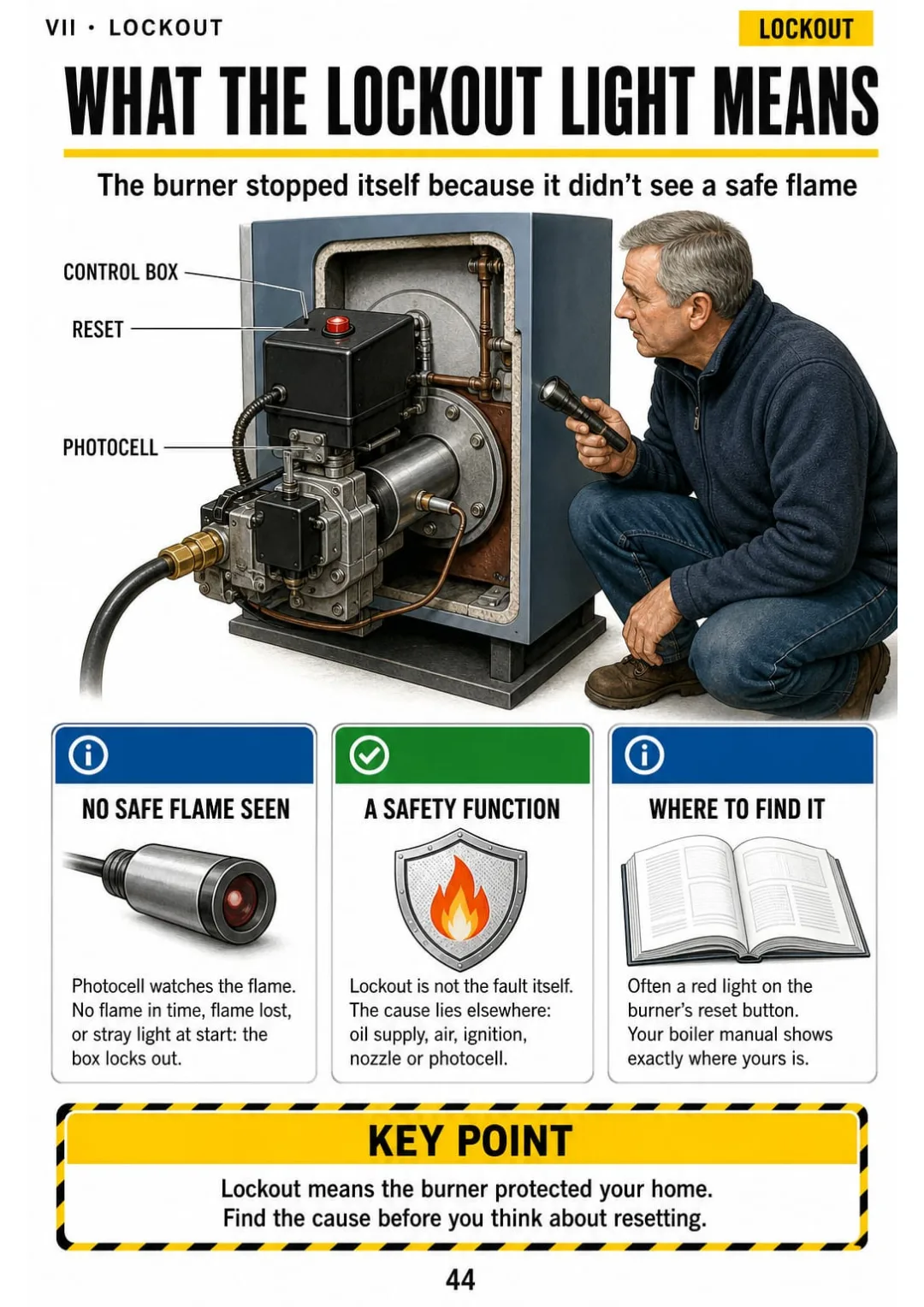
Lockout = the control box saw no safe flame and stopped the burner
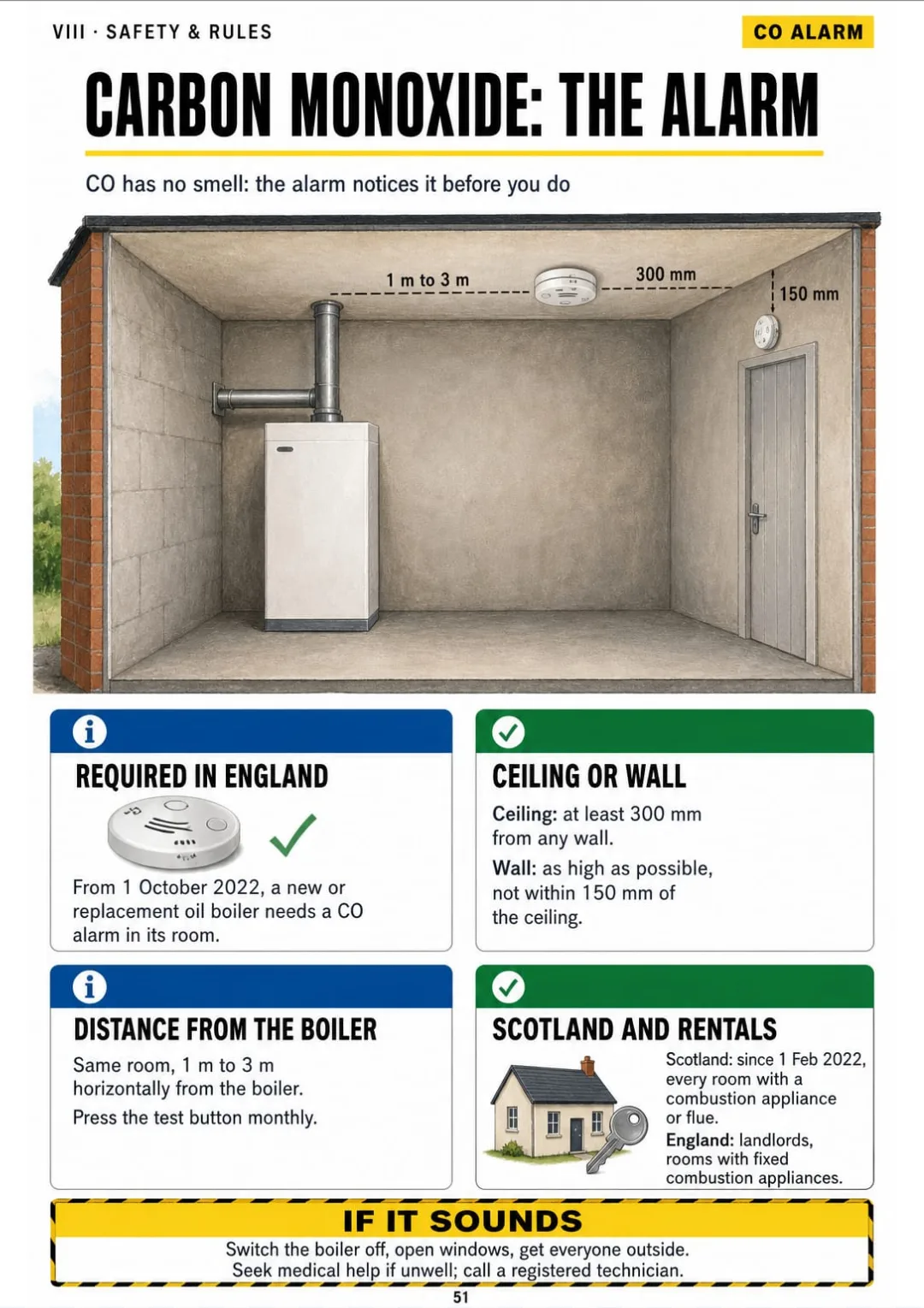
CO alarm: same room, 1–3 m from the boiler, 300 mm from the wall on a ceiling

Swipe to see more →

These are real pages from the book. The table of contents is the full one: 10 parts and 61 topics.

The Problem Isn't You. It's How It Was Explained.

You're standing by the tank in the garden, torch in hand, looking at the clear tube on the side. You can't tell if that line is the oil or just a stain.

The manual covers it in a long paragraph: the valve, the reading, a warning about leaving it open. It's all words, and none of it shows you where to look.

The sight gauge: open, read at eye level, close – and why a yellowed tube needs replacing

In the book, the sight gauge is one page: the tube drawn, the valve at the bottom marked open and closed, the level read at eye level. And beside it, why a yellowed tube needs replacing.

The same goes for the float gauge, dipping the tank by hand, water in the tank, the fire valve and the lockout light: each one has its own page.

You open the valve, read the level, close it and walk back inside. No manual spread across the kitchen table.

COMPARE FOR YOURSELF

The Same Topic, Two Ways to Learn It

THIS
  • The manual: line after line of text
  • Tank types explained only in words
  • You talk to the installer still unsure
Secondary containment, commonly referred to as a bund, should be provided where the storage installation meets any of the criteria set out in the applicable guidance, such as proximity to controlled waters, drains or boreholes, a capacity above the stated threshold, or other site-specific risk factors. The secondary containment must be capable of retaining not less than 110 per cent of the capacity of the primary container, and the condition of both skins should be assessed periodically.
FOR THIS
  • Single-skin and bunded side by side in one drawing
  • The 110% rule in a box
  • You see it and you get it
A bund must hold 110% of the tank: 2,750 litres for a 2,500-litre tank.
CONTENTS

Take a Look at the 10 Parts and 61 Topics

10 parts, 65 pages, all illustrated: your system at a glance, the tank, the gauge, the oil line and filters, the burner, heating and hot water, lockout, safety and the rules, service and winter, and a quick review

IYour system at a glance · pp. 5-11
  1. From tank to flue on one page
  2. Why rural homes heat with oil
  3. Kerosene, not diesel
  4. The types of oil boiler
  5. Condensing vs older non-condensing
  6. Reading the boiler data plate
  7. What you can do and what you can't
IIThe oil tank · pp. 12-19
  1. Single-skin vs bunded tank
  2. Plastic or steel
  3. Parts of the tank
  4. Sizes and how long a tank lasts
  5. When a bunded tank is required
  6. Where the tank can sit
  7. The base under the tank
  8. The tank inspection you can do yourself
IIIReading the gauge and the oil level · pp. 20-25
  1. Sight gauge: the clear tube
  2. Float gauge and dial
  3. Electronic and remote monitors
  4. Dipping the tank by hand
  5. Don't run it dry
  6. Water in the tank
IVThe oil line and filters · pp. 26-31
  1. The oil line, drawn
  2. The isolation valve at the tank
  3. The fire valve
  4. Primary filter at the tank
  5. Secondary filter at the boiler
  6. Air in the oil line
VInside the pressure-jet burner · pp. 32-37
  1. The burner, every part labelled
  2. The firing sequence, step by step
  3. The oil pump and pressure
  4. The nozzle: why it gets changed every year
  5. The photocell: the burner's eye
  6. The heat exchanger and the flue
VIHeating and hot water side · pp. 38-43
  1. Regular, system and combi
  2. The pressure gauge on a sealed system
  3. Programmer, room thermostat and boiler thermostat
  4. Pump, valves and the cylinder
  5. Radiators: cold at the top, cold at the bottom
  6. The condensate pipe
VIILockout and no heating · pp. 44-50
  1. What the lockout light means
  2. The reset rule: once, then call
  3. Before you press reset: the 5 checks
  4. No heating flow: blank boxes
  5. Lockout right after a delivery
  6. Burner runs but the house stays cold
  7. Noises, smells and smoke
VIIISafety, leaks and the rules · pp. 51-56
  1. Carbon monoxide: the alarm
  2. Signs of an oil leak
  3. If you find a leak: the first steps
  4. Your insurance and the oil tank
  5. Who can do what: registered technicians
  6. England, Scotland, Wales, Northern Ireland
IXService, deliveries and winter · pp. 57-62
  1. The annual service: what the technician does
  2. Questions to ask the technician
  3. Ordering oil: litres and timing
  4. On delivery day
  5. Before winter: the October check
  6. Cold snap: frozen condensate pipe
XQuick review and frequent mistakes · pp. 63-65
  1. Your system: fill in the blanks
  2. Frequent mistakes with oil heating
  3. When to call a technician: the one-page list

One Page, One Topic, All Clear

Think of it this way:

It's a Sunday in January, 7am, the radiators are cold and the red light on the boiler is on.

You open the book at the lockout page and see the control box drawn, the photocell looking for the flame, and the 5 checks to do before you touch reset.

Pump pressure comes from the data plate and is checked with a gauge at every service.

Same with the sight gauge, the fire valve, the bunded tank, the CO alarm and the October check: each one on its own page.

Oil Boiler & Tank Illustrated is 10 parts and 61 topics, all drawn, and at the end a fill-in-the-blanks page for your own system and the when-to-call list.

What you see drawn, you don't have to memorize.

What's Inside Oil Boiler & Tank Illustrated:

Ipp. 5-11

Your system at a glance

The whole system on one map, kerosene not diesel, boiler types, condensing or not, the data plate and what's yours to do

IIpp. 12-19

The oil tank

Single-skin or bunded, plastic or steel, the parts, sizes, where the tank can sit, the base and your own walk-round check

IIIpp. 20-25

Reading the gauge and the oil level

The sight gauge, float gauge, remote monitors, dipping by hand, not running dry and water in the tank

IVpp. 26-31

The oil line and filters

The oil line drawn, the isolation valve, the fire valve, both filters and air in the line

Vpp. 32-37

Inside the pressure-jet burner

The burner with every part labelled, the firing sequence, the pump, the nozzle, the photocell, the heat exchanger and the flue

VIpp. 38-43

Heating and hot water side

Regular, system or combi, the pressure gauge, the controls, pump and cylinder, radiators and the condensate pipe

VIIpp. 44-50

Lockout and no heating

The lockout light, the reset rule, the 5 checks, the no-heating flow, lockout after a delivery, noises and smells

VIIIpp. 51-56

Safety, leaks and the rules

CO alarms, signs of a leak and the first steps, insurance, registered technicians and the rules in each UK nation

IXpp. 57-62

Service, deliveries and winter

The annual service, questions for the technician, ordering in litres, delivery day, the October check and frozen condensate pipes

Xpp. 63-65

Quick review and frequent mistakes

Your own system to fill in, the frequent mistakes and the one-page when-to-call list

At the end of the book: A fill-in-the-blanks page for your own system, the frequent mistakes and a one-page when-to-call list.
Plus: 2 Free Books

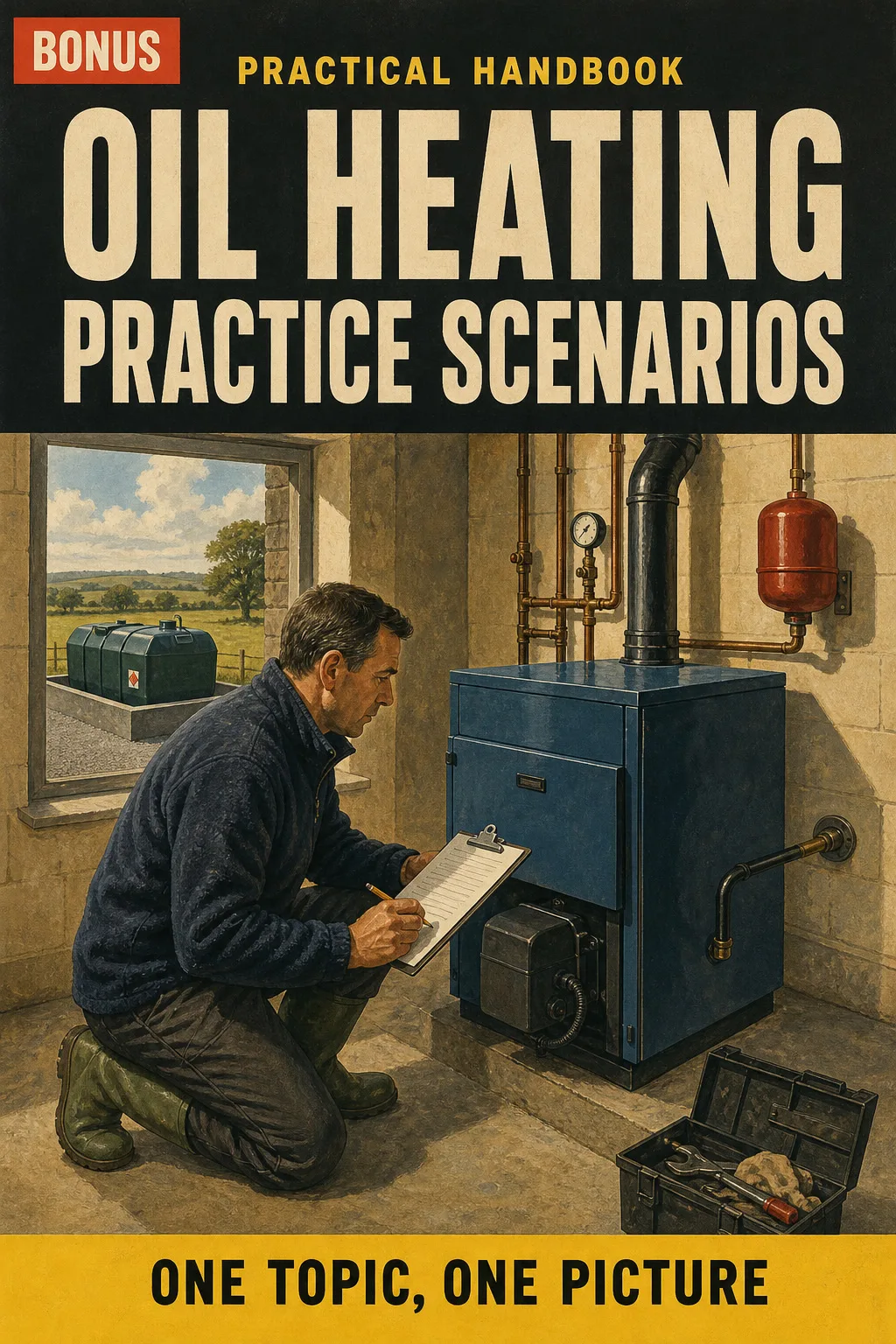
Oil Heating Practice Scenarios

BONUS 1: «Oil Heating Practice Scenarios»

Value on its own: US$ 17.90

Real winter situations (lockout at 7am, a cloudy sight gauge, a smell of oil by the tank) to work through on paper, with the safe answer on the next page, so you have already thought it through before it happens.

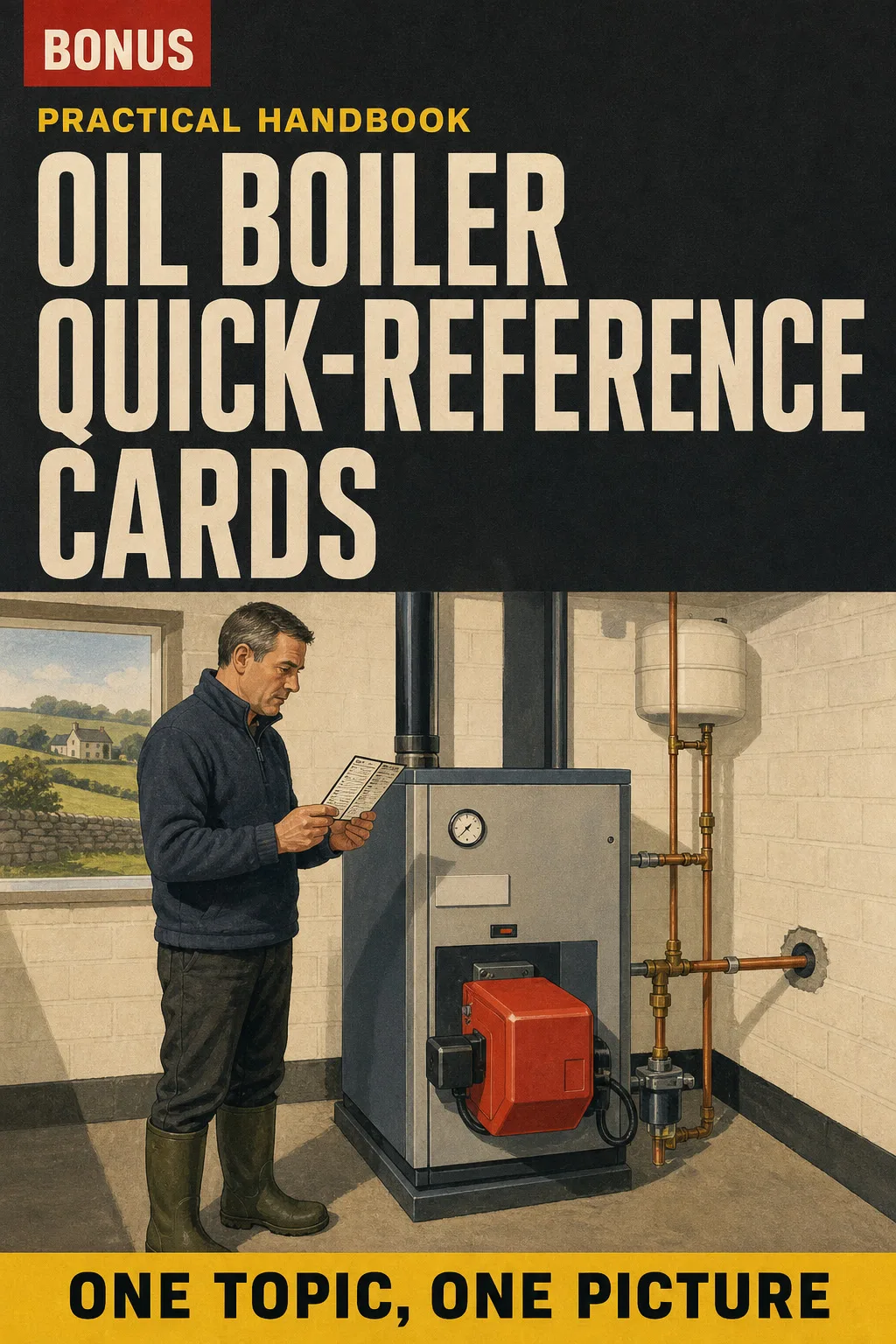
Oil Boiler Quick-Reference Cards

BONUS 2: «Oil Boiler Quick-Reference Cards»

Value on its own: US$ 14.90

Printable cards to keep by the boiler and the tank: the lockout rule, how to read your gauge, the signs of a leak and when to call a technician, all at a glance.

Oil Boiler & Tank Illustrated with 2 Free Books

  • Oil Boiler & Tank Illustrated: 65 illustrated pagesUS$ 63
  • BONUS 1: Oil Heating Practice ScenariosUS$ 17.90
  • BONUS 2: Oil Boiler Quick-Reference CardsUS$ 14.90
  • High-resolution PDF to printIncluded
Total value US$ 95.80
YOUR PRICE:
US$ 27
You save US$ 68.80
YES, I WANT OIL BOILER & TANK ILLUSTRATED FOR US$ 27

📄 This is a digital PDF book sent to your email: nothing is printed or shipped.

Secure purchaseEncrypted payment30-day guarantee

PDF by email: We email you Oil Boiler & Tank Illustrated as a PDF, together with the two free books. It's a single payment: no installments, no extra charges.

Who This Book Is For

You've just moved to oil heating

You've just moved to oil heating

The whole system from tank to flue on one page, so the tank in the garden and the boiler in the kitchen finally make sense.

Winter is on its way

Winter is on its way

The October check, the gauge and the reset rule, all drawn, so you're ready before the first hard frost.

You look after your parents' house

You look after your parents' house

Printed and left by their boiler: the lockout light, the gauge and the when-to-call list, so the next early phone call has a page to point to.

Everything You Get Today

US$ 95.80US$ 27
YES, I WANT OIL BOILER & TANK ILLUSTRATED FOR US$ 27

📄 This is a digital PDF book sent to your email: nothing is printed or shipped.

30DAYS
GUARANTEE

30-Day Guarantee

Try Oil Boiler & Tank Illustrated for 30 days, bonus books included.

We refund everything if the file won't open, if the book isn't what you see here, if you were charged twice or if the email doesn't arrive. Just email us.

You pay once. No subscriptions.

Frequently Asked Questions

Will it work for my boiler, and is it for me if I'm new to oil?

Yes. It explains the pressure-jet burner that most domestic oil boilers use, whatever the make, and the data plate page shows you where to find your model. It starts with the whole system on one page, so it suits you if you've just moved, and if you've had oil heating for years. For anything specific to your model, the manufacturer's instructions always come first.

Where does the content come from?

It's checked against current UK guidance: Approved Document J, the Control of Pollution (Oil Storage) (England) Regulations 2001, Environment Agency guidance and the matching rules in Scotland, Wales and Northern Ireland. Where the rules differ between nations, the page says so.

Is this official material?

No. It's an independent illustrated guide, not affiliated with any regulator, registration scheme or boiler manufacturer.

Does it replace a technician's training or the annual service?

No. It covers understanding, basic checks and simple fault finding. The nozzle, combustion, flue and tank installation are jobs for a registered technician, and the book says so clearly.

What are the practice scenarios?

Winter situations written for this book, like a red light after a delivery or a yellowed sight tube, with the safe answer on the next page. They're not taken from any scheme or exam.

How will I get it?

As a PDF by email, sent to the address you enter when you pay. The 2 free books come with it.

Do I have to pay every month?

No. It's a one-off payment.

Can I have it on paper?

Yes. It's a PDF you can print at home or at a print shop and keep by the boiler.

How do refunds work?

You have 30 days. We refund everything if the file won't open, if the book isn't what you see on this page, if you were charged twice or if the email doesn't arrive: just email us.

Before You Close This Page

No more rereading the manual and getting nowhere.

The lockout light, the gauge and the fire valve: you see them drawn, and that's it.

You face the next cold morning knowing where everything is.

Drawings make studying faster.

The book is right below.

One-time payment: US$ 27 · Guarantee: 30 days · PDF by email

YES, I WANT OIL BOILER & TANK ILLUSTRATED FOR US$ 27

📄 This is a digital PDF book sent to your email: nothing is printed or shipped.